- 10% Off Flooring Services
- Free Estimates

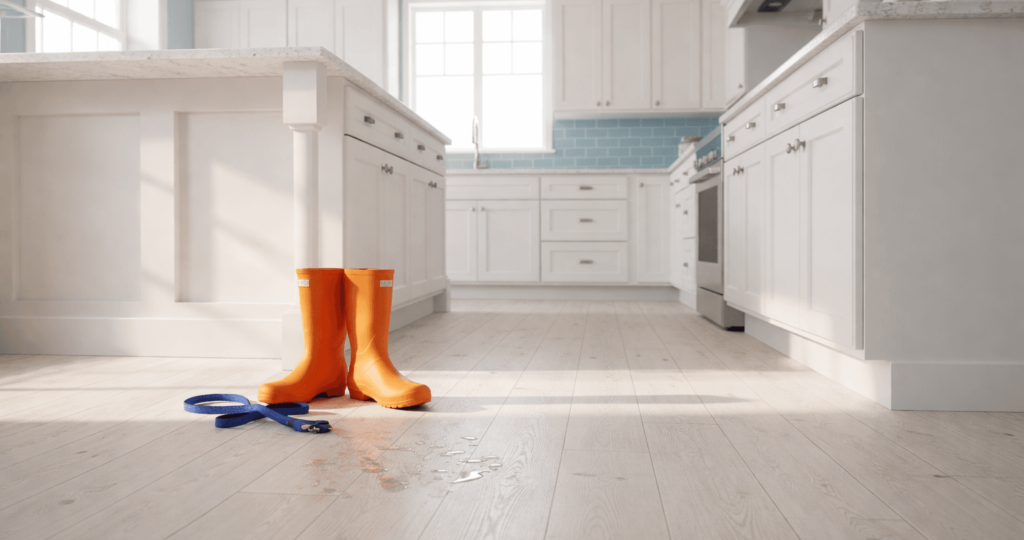
The best kitchen flooring options are those that can withstand wet boots, grit, and daily spills without showing wear.
For most homes in Carmel, NY, high-quality luxury vinyl plank (LVP) is the best flooring for kitchen use in real life: it is waterproof, comfortable, and low maintenance. Porcelain tile is the best floor for kitchen durability if you can live with a harder, colder feel. Engineered hardwood is a style-forward option that can work, but only with strong moisture control and quick cleanup.
✔ Waterproof wins: For most Carmel kitchens, LVP is the easiest all-around choice
✔ Tile lasts: Pick porcelain tile when durability beats comfort
✔ Prep matters: Subfloor flatness is what makes any floor perform
✔ Traction counts: Use DCOF guidance when choosing tile finishes — a higher DCOF (e.g., ≥ 0.42 for wet areas) means better slip resistance
✔ Budget smart: Sheet vinyl beats cheap plank when seams are the risk
✔ Vinyl plank installation costs vary widely, and prep work is a major driver of total cost.
✔ Wood flooring standards call for moisture checks and, when needed, ASTM moisture testing before installation
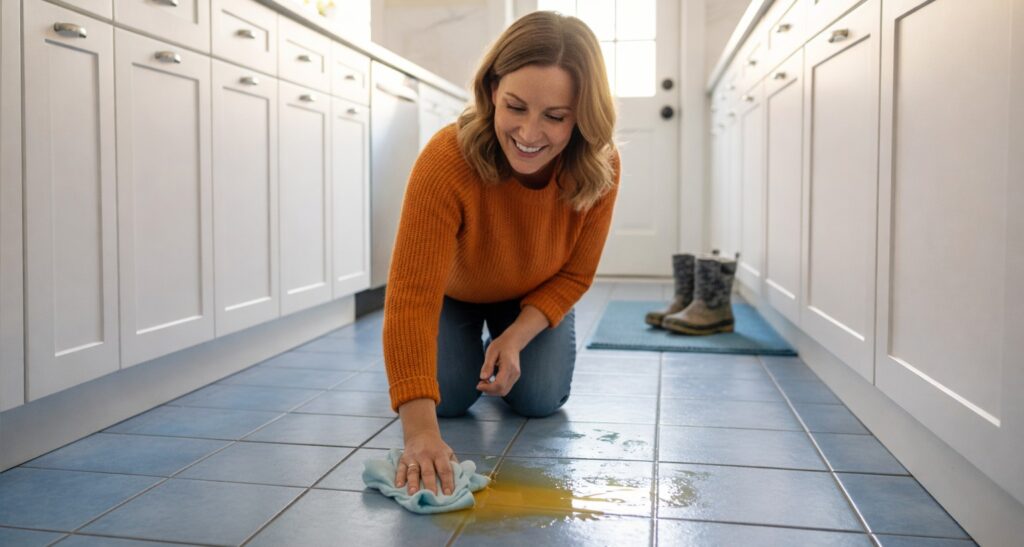
If you cook often, comfort matters. Softer surfaces reduce fatigue, and the right underlayment can reduce clatter in open layouts.
Grit acts like sandpaper. Protect the surface:
Floors dominate the visual field. When they look cohesive and clean, the whole kitchen reads newer. Remodeling demand remains strong nationally, keeping high-visibility updates like floors top of mind.
LVP/LVT are popular kitchen flooring options because many products combine a waterproof core with a durable wear layer. The common failure point is not the plank; it is the prep: uneven subfloors and rushed transitions.
Tile handles water and heat extremely well. For wet traction, the tile industry uses Dynamic Coefficient of Friction (DCOF) testing guidance, and many products intended for level interior floors are commonly specified around a minimum wet DCOF threshold.
Engineered hardwood brings warmth and resale-friendly style. The National Wood Flooring Association (NWFA) installation guidance emphasizes moisture measurement and, when needed, ASTM testing to confirm conditions are suitable.
Laminate can look fantastic for the price, but seams are less forgiving than vinyl when water sits. Sheet vinyl is the budget workhorse when you want fewer seams around spill zones.
If you want one answer, choose quality LVP. Well-known testing and review outlets consistently highlight vinyl’s balance of durability, water performance, and value for high-traffic rooms.
Tile is the “long game” choice when installed correctly.
If you want a consistent look across kitchens and bathrooms, LVP or LVT is often the easiest choice. It performs well in wet areas, feels warmer and softer underfoot, and works seamlessly from room to room. Tile is the better option when maximum water resistance and long-term durability are the top priorities, and you are comfortable with a firmer, colder surface.
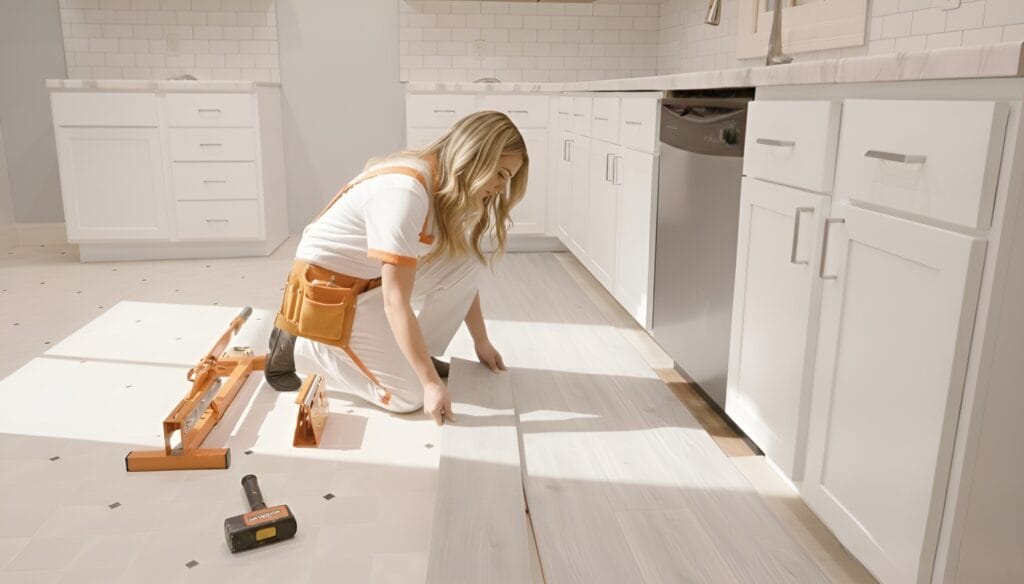
Most “floor problems” start underneath. Floating floors need a flat base to prevent bounce and joint stress, and tile needs a stable substrate to reduce grout cracking. Understanding subfloor versus underlayment helps explain why prep is not optional.
Moisture trapped under a floor can cause odor, warping, or adhesive issues. Wood guidance points to moisture evaluation and ASTM testing when conditions suggest excess moisture. Underlayment should match the product’s requirements, not a generic “one-size” roll.
Plan for dishwasher height, fridge moves, and doorway transitions before the first cut. Bad planning creates trapped appliances and dirt-catching edges.
Material is only part of the budget. Removal, leveling, trim, and transitions can change the total quickly. National cost breakdowns for vinyl plank show a wide installed range based on labor and scope.
With the right product and correct installation, vinyl and laminate often last far longer than the viral “replace every five years” claim, commonly 10 to 20 years.
Luxury vinyl plank (LVP) is the best all-around choice for most kitchens because it is water-resistant, durable, and easy to maintain.
Wood-look floors in light to medium natural tones are trending, especially waterproof LVP and large-format tile with minimal grout lines.
LVP or porcelain tiles are top picks for concrete because they handle moisture well. LVP is warmer and quieter; tile is the most durable.
Sheet vinyl is usually the most cost-effective option, especially for larger kitchens, because it is affordable and has fewer seams.
Most homeowners find vinyl the simplest: sweep grit, wipe spills, and damp-mop.
Choosing the best flooring for a kitchen is easier when you can see real samples, compare performance side by side, and get honest guidance based on how you actually live.
Carmel Flooring Company helps Carmel, NY homeowners narrow down the right kitchen flooring options for their space, style, and budget, then completes professional flooring installation so your new floor looks great and holds up for years. Even premium materials can fail when the subfloor is uneven, transitions are rushed, or moisture is ignored.
Schedule a consultation with Carmel Flooring Company. You’ll get expert input, practical options, and a clear next step toward a durable, good-looking kitchen floor.