- 10% Off Flooring Services
- Free Estimates


You should generally not install cabinets on top of a floating Luxury Vinyl Plank (LVP) floor because the weight and fixed nature of cabinets restrict the floor’s natural expansion and contraction, leading to buckling, gapping, or damage, and voiding warranties.
For a permanent installation, the recommended approach is to install cabinets first, then install LVP flooring around them with proper expansion gaps. In some cases, glue-down LVP may offer more stability, but it still introduces challenges if the flooring ever needs to be replaced.
Here, we’ll explain why installation order matters and how to make the right long-term decision
✔ Installing kitchen cabinets on top of floating LVP restricts movement and can lead to buckling, gaps, and warranty issues.
✔ Proper flooring installation typically means installing cabinets first, then LVP flooring around them with expansion gaps.
✔ Just because cabinets can sit on vinyl plank flooring doesn’t mean they should—static weight creates long-term risks.
✔ Glue-down LVP offers more stability but still complicates future flooring replacement when installed under cabinets.
✔ Today’s kitchen flooring trend focuses on durable materials like LVP paired with manufacturer-approved installation methods.
Floating LVP needs room to move. When cabinets are installed on top, the flooring becomes pinned in place. This restriction prevents natural expansion and contraction, which is essential for long-term performance.
This is the most common reason professionals avoid lvp under cabinets in permanent installations.
When flooring can’t move:
These issues often show up months—or even years—after installation, especially during seasonal temperature changes.
Most manufacturers clearly state that kitchen cabinets on top of flooring void LVP warranties. If the floor fails, the responsibility falls on the homeowner—not the installer or the manufacturer.
That’s a costly risk to take.
If a plank gets damaged under a cabinet, repairs become extremely difficult—which is why many homeowners ask, can you put cabinets on top of LVP in the first place. Cabinets may need to be partially or fully removed just to replace a section of flooring, turning what could have been a simple fix into a major project.
This is where many homeowners confuse what’s possible when considering vinyl flooring before or after cabinets.
Yes, kitchen cabinets can sit on vinyl plank flooring, but that doesn’t mean it’s a smart or safe long-term decision—especially with floating LVP.
Luxury vinyl plank flooring is designed to handle everyday household use—but weight capacity depends on how the load is applied.
Once cabinets are installed, they don’t move. That constant pressure is why kitchen cabinets on top of flooring can cause problems months or years later—even if the floor looks fine at first.
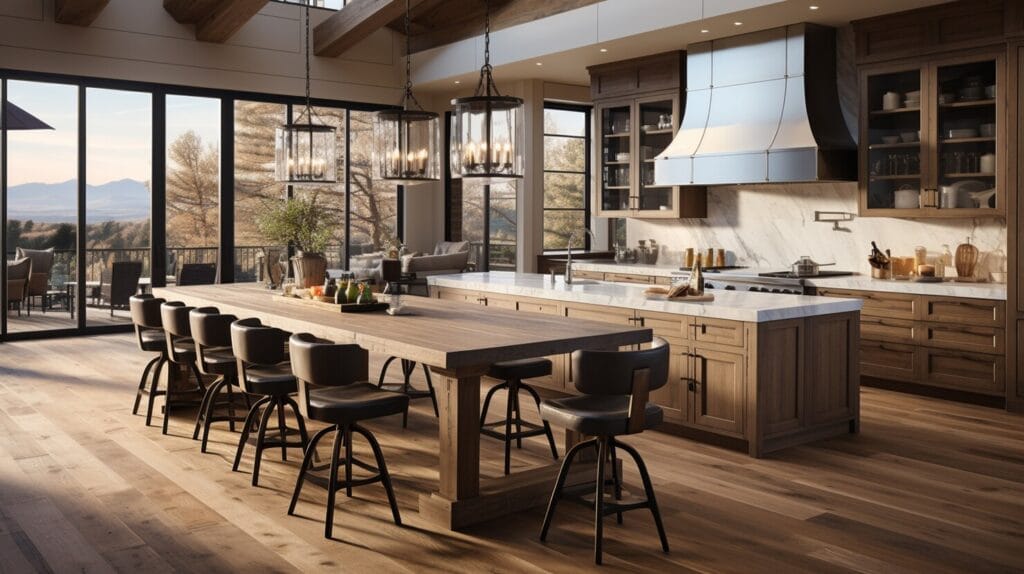
From a professional flooring installation standpoint, the best surface for kitchen cabinets is the subfloor, not the finished floor.
Modern homeowners want floors that balance durability, design, and practicality—and LVP continues to lead the way. In fact, the global Luxury Vinyl Plank (LVP) market is projected to grow to about $22.35 billion by 2032.
LVP checks the boxes homeowners care about most:
As printed vinyl flooring is projected to represent over 60% of the global vinyl flooring market, homeowners and manufacturers alike are placing great emphasis when considering vinyl flooring before or after cabinets.
Homeowners are prioritizing:
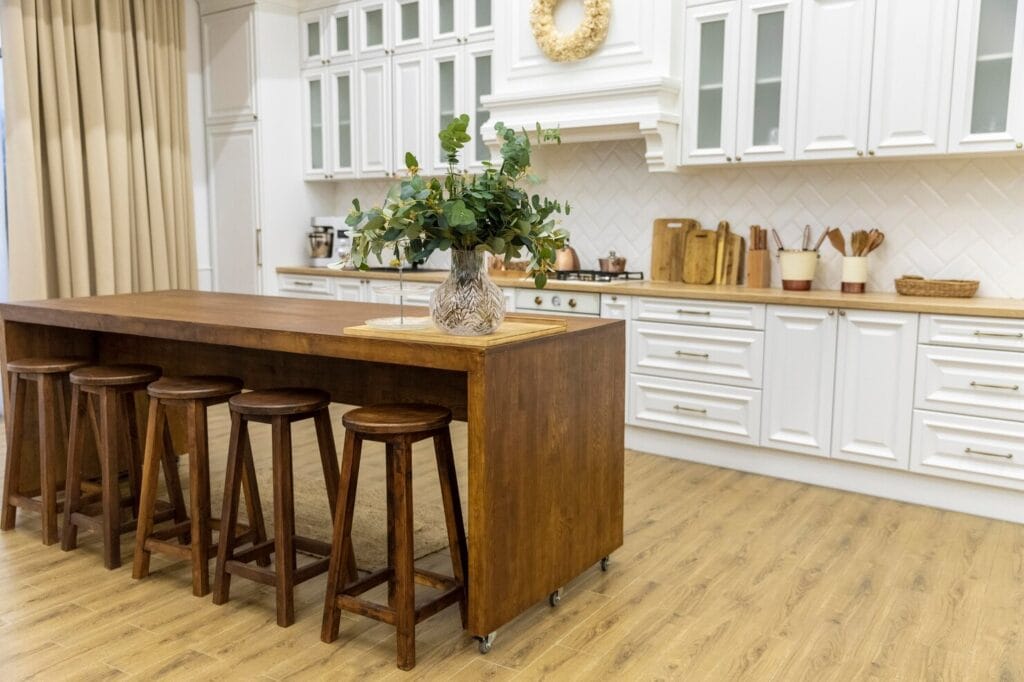
Yes. Coordinating flooring installation with cabinet installation helps ensure proper sequencing, correct expansion gaps, and avoids costly mistakes—especially when deciding on vinyl flooring before or after cabinets.
Glue-down LVP offers more stability than floating floors, but installing kitchen cabinets on top of flooring can still make future repairs or replacements more difficult and costly.
Not usually. Appliances are designed to sit on floating floors and can be moved, while cabinets create permanent pressure points that restrict movement—unlike typical household loads.
It can. Improper flooring installation—such as placing LVP under cabinets—may raise concerns during inspections or future renovations, potentially affecting buyer confidence.
Professionals install cabinets on the subfloor and LVP around them, allowing homeowners to update flooring later without disturbing cabinetry or compromising performance.
If you’re planning a kitchen remodel and wondering can you put cabinets on top of LVP, the safest answer is to talk to a professional in Carmel, NY, before installation begins.
Contact Carmel Flooring Company to plan your flooring installation correctly, protect your warranty, and ensure your kitchen looks great—and performs—for years to come.