
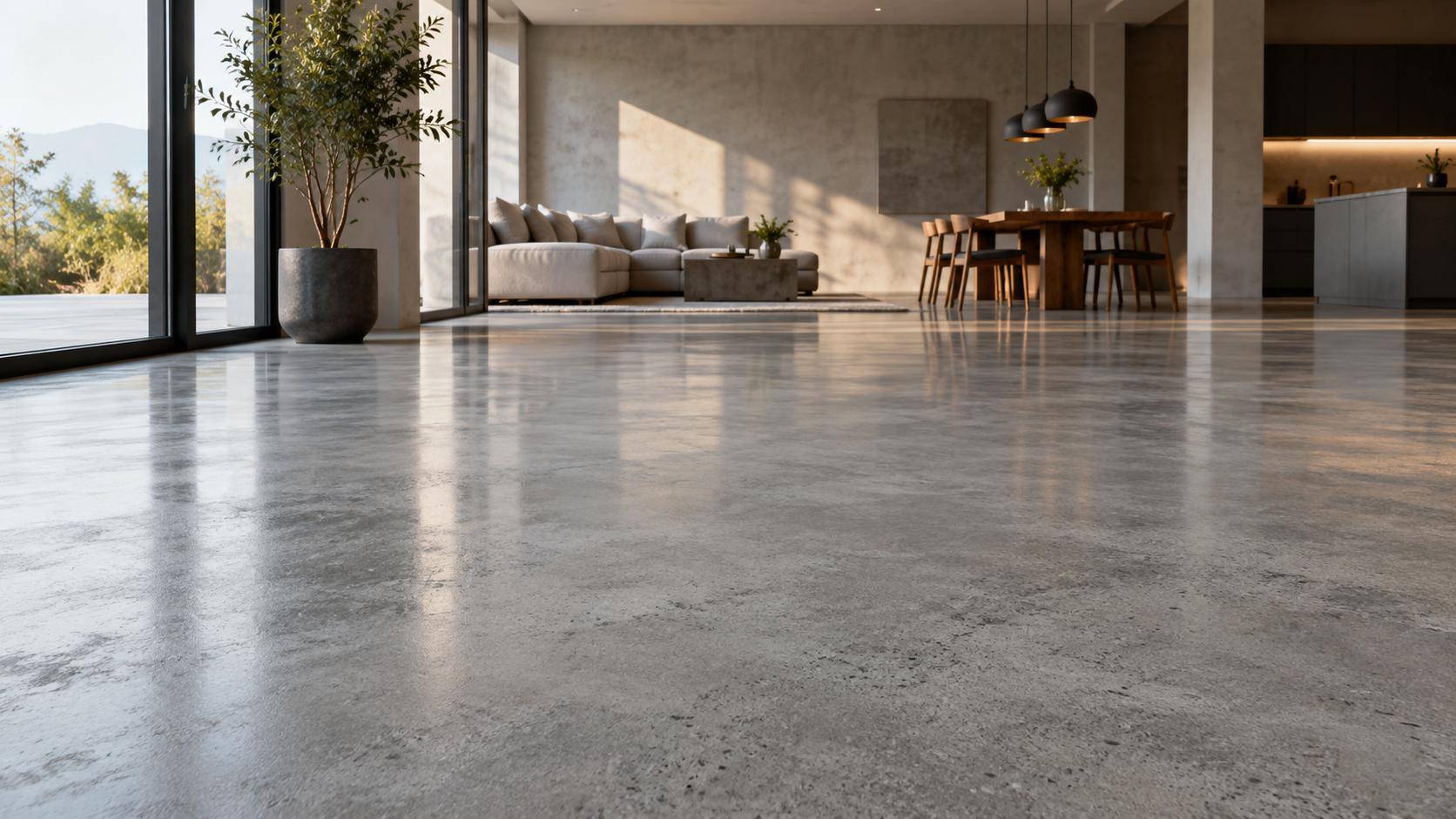
What’s in This Guide
Quick Facts
- Resurfacing can renew worn concrete when the underlying slab remains stable and suitable for a bonded finish.
- Repair active cracks, spalls, delamination, moisture problems, and other defects before applying a new surface system.
- Surface preparation matters because coatings, overlays, and repair materials need a clean, sound, properly profiled substrate for adhesion.
- Overlays, polishing, and coatings solve different problems, so the right choice depends on slab condition, appearance, traffic, and maintenance.
- Professional evaluation can determine whether concrete restoration is practical or more substantial repair or replacement is needed.
Concrete floors can look tired before the slab reaches the end of its useful life. In Carmel homes, garages, basements, offices, retail spaces, and commercial properties, wear may appear as stains, dullness, scaling, old coatings, small cracks, or uneven patches. Concrete restoration can address many conditions without automatically replacing the slab.
Choose a process that matches existing concrete. Resurfacing, refinishing, overlays, polishing, and coatings require different preparation and solve different surface problems. Before selecting a concrete floor resurfacer or finish, evaluate the slab and correct conditions that could undermine the surface.
What Concrete Restoration Can Accomplish
Concrete restoration can renew an existing slab through repair, surface preparation, resurfacing, polishing, or protective finishes. It works best when the slab remains sound and deterioration is mainly near the surface.
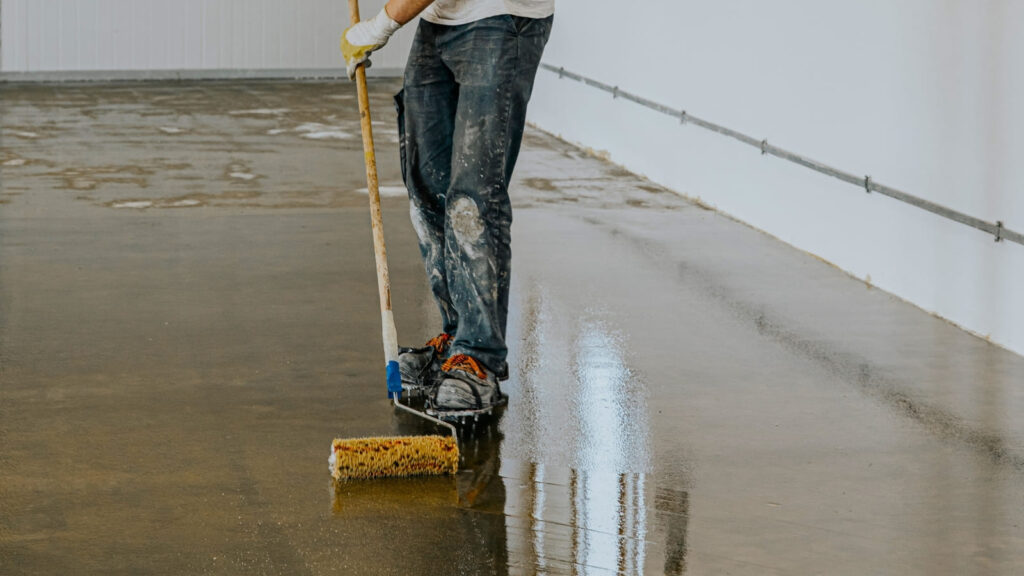
Resurfacing and overlays can address cosmetic wear and minor imperfections, while polishing refines exposed concrete. Coatings, including concrete resurfacing epoxy systems, can add a protective or decorative finish when conditions are suitable.
Any loose, delaminated, contaminated, moving, or moisture-affected concrete should be addressed before a new finish is installed.
How to Choose a Concrete Resurfacing Approach
Step 1: Inspect the Slab Condition
Identify cracks, spalls, hollow or delaminated areas, scaling, stains, previous coatings, low spots, and moisture signs. Determine whether cracks appear dormant or keep moving. Large elevation changes, recurring movement, or widespread deterioration may exceed what a thin resurfacing layer can correct.
Step 2: Complete Necessary Repairs First
Address damaged or unsound areas before resurfacing. Depending on the condition of the slab, this may involve repairing cracks, removing weak material, or correcting other surface defects so the new finish has a more suitable base.
Step 3: Prepare the Surface for Bonding
A sound surface must also be clean and properly profiled. ICRI Technical Guideline 310.2R addresses preparation for sealers, coatings, polymer overlays, and concrete repair, using Concrete Surface Profile benchmarks from CSP 1 through CSP 10. The required profile depends on the installed material, so grinding, shot blasting, scarifying, or another method should match the system specification.
Step 4: Evaluate Moisture Before Sensitive Systems
Moisture can affect coatings and floor finishes. ASTM F1869 measures moisture vapor emission from bare concrete in pounds of moisture per 1,000 square feet over 24 hours. ASTM notes that results reflect conditions at the time of testing. Product-specific limits still determine whether a coating, overlay, or flooring system is acceptable for a slab.
Step 5: Match the Finish to the Space
Choose based on traffic, exposure, cleaning routines, appearance, downtime, and maintenance. A garage, basement, retail floor, and office lobby can place very different demands on the same concrete substrate.
Resurfacing, Overlays, Polishing, and Coatings Compared
Cementitious Resurfacing
Cementitious resurfacing places bonded material over prepared concrete to create a renewed surface. It can address generalized wear and minor irregularities when the slab is sound enough to receive it.
Concrete Overlays
Overlays add a new layer that can be decorative, functional, or both. Thickness, bond requirements, and finish options vary by system. Commercial concrete floor resurfacing may use overlays when a large area needs a uniform appearance or renewed wearing surface without full slab replacement.
Concrete Polishing
Polishing works with the existing concrete rather than covering it. Grinding and progressively refining the surface can improve smoothness and sheen while keeping the concrete exposed. Deep cracks, spalls, severe unevenness, or incompatible old coatings still require correction before polishing.
Resinous and Epoxy Coatings
Resinous coatings, including epoxy-based systems, can add color, cleanability, and surface protection. Their performance depends heavily on substrate preparation, moisture conditions, product selection, installation, and service environment. No coating should be assumed to correct structural movement or failing concrete beneath it.
When Resurfacing May Not Be Enough
Resurfacing is not a substitute for structural or extensive slab repair. A larger restoration scope may be necessary when the concrete shows:
- Widespread delamination or loose surface areas
- Significant settlement or uneven slab movement
- Recurring or active cracks
- Deep deterioration or extensive spalling
- Serious moisture intrusion
- Concrete that continues to break apart or lose strength
Patching isolated areas and covering the floor may leave the underlying cause unresolved.
A condition assessment should distinguish cosmetic wear from substrate failure so property owners can avoid investing in a finish that is not appropriate for the slab.
Frequently Asked Questions
Can only part of a concrete floor be resurfaced?
In some cases, targeted concrete restoration may be possible. The condition of the surrounding slab, the selected system, and the desired appearance can affect whether a partial treatment makes sense.
Can a concrete floor resurfacer be used around floor drains?
Potentially. Drain locations, floor slope, drainage needs, and the resurfacing material should all be considered before work begins.
What happens to control joints during concrete resurfacing?
Existing joints usually need to be evaluated as part of the project. How they are handled depends on the slab, the resurfacing system, and the expected movement of the concrete.
Can commercial concrete floor resurfacing be completed in sections?
It may be possible to divide a commercial project into sections depending on the layout, traffic needs, and installation requirements. A contractor can determine whether phased work is practical for the space.
Will concrete resurfacing change how slippery the floor feels?
It can. Surface texture, finish type, coatings, and environmental conditions can all affect traction. For Carmel properties, the finish should be selected with the intended use of the space in mind.
Renew a Worn Concrete Floor with the Right Scope
For Carmel homeowners and businesses, the right concrete restoration plan starts with slab condition, not finish alone. Carmel Flooring Company can evaluate worn concrete, discuss repair and resurfacing options, and help determine an appropriate project scope.