- 10% Off Flooring Services
- Free Estimates

✔ Routine maintenance and recoating from experienced flooring professionals extends the life of your hardwood floors and protects your investment.
✔ Act within hours to prevent permanent staining.
✔ Avoid soaking the floor or using steam cleaners.
✔ Vinegar neutralizes fresh urine, but deep stains require sanding.
✔ Lingering odor often means contamination below the finish.
✔ Professional refinishing restores protection and eliminates embedded odor.
✔ Board replacement, when necessary, protects structural integrity and long-term durability.
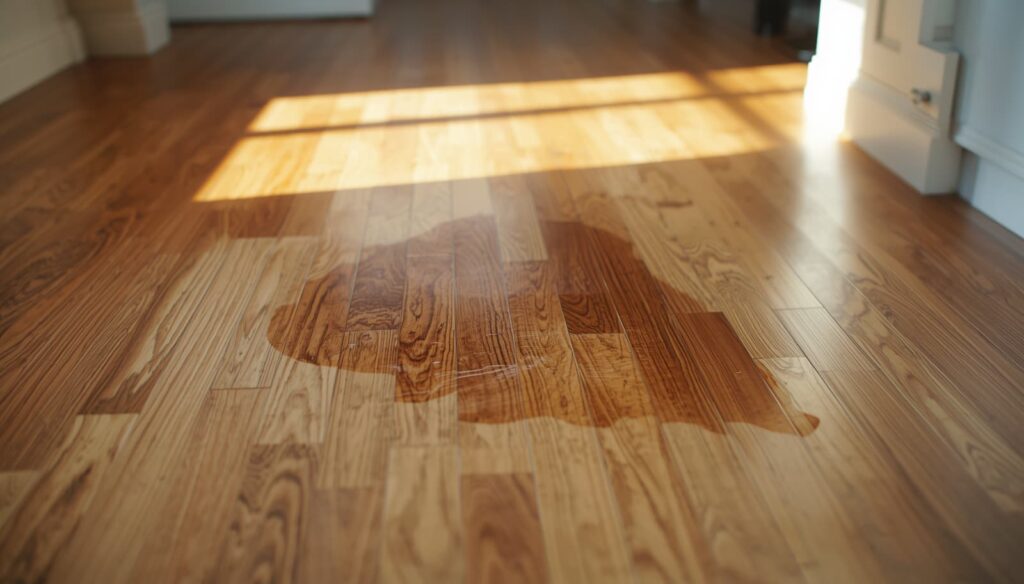
Pet urine can begin damaging hardwood floors within hours. Wood is porous by nature, and once liquid penetrates past the protective finish, it seeps into the grain and sometimes into the subfloor.
Excessive moisture is one of the leading causes of hardwood floor deterioration. That includes pet accidents. If you want to remove pet stains from hardwood floors effectively, you must act quickly, use the correct cleaning approach, and understand when surface cleaning is not enough.
Done properly, most damage can be minimized or reversed.
Done incorrectly, it can lead to permanent black staining, lingering odors, and even replacement of the board.
This guide explains exactly how to remove pet stains and odors from hardwood floors, when DIY methods work, and when professional refinishing becomes necessary.
Pet urine is not just water. It contains uric acid, ammonia, and bacteria. When it sits on hardwood, it can break down the protective polyurethane layer and soak into the wood fibers. Uric acid crystals bond to the material and can reactivate in humid conditions, which explains why the smell returns even after cleaning.
Once urine reaches raw wood, standard surface cleaners will not remove the contamination.
If untreated, pet urine hardwood floor damage can include:
In severe cases, structural repairs may be required. Early intervention makes a significant difference.
Before choosing a cleaning method, determine how deep the stain goes.
These typically show light discoloration with no warping or strong odor. The finish is still mostly intact. These stains are often removable with proper cleaning and mild treatment.
Black or dark gray spots usually indicate that urine has penetrated through the finish and into the wood. Strong odor is common. You may also notice a slight softening of the wood or subtle board movement.
If the wood itself is discolored, cleaning alone will not fully correct the issue.
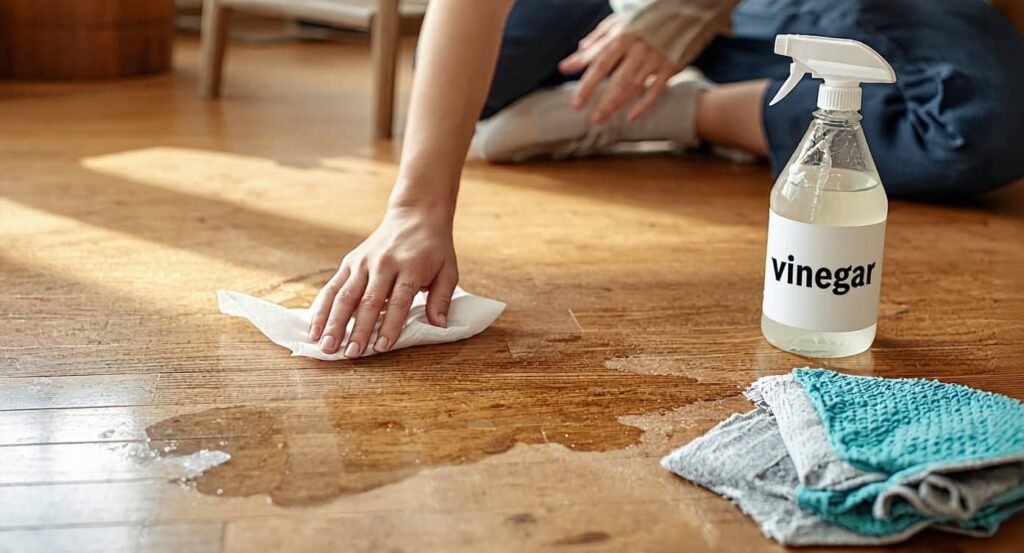
Fresh accidents are the easiest to correct. Immediate action limits penetration.
Use absorbent paper towels or a clean cloth. Press firmly and blot. Do not wipe, which can spread moisture across the surface.
Mix one part white vinegar with one part water. Lightly dampen a microfiber cloth and gently clean the area. Vinegar helps neutralize alkaline compounds in urine. Avoid soaking the floor. Excess water can cause further damage.
Use a product specifically labeled safe for sealed hardwood floors. Avoid ammonia-based cleaners. Ammonia can intensify odor and damage finishes.
Dry the area completely with a clean cloth. Improve airflow with fans if necessary. In humid environments, a dehumidifier helps prevent moisture from settling into the wood.
Acting within the first few hours dramatically reduces long-term staining.
When stains have dried and darkened, the approach changes.
For mild discoloration:
Always test in an inconspicuous area first. Hydrogen peroxide can lighten wood permanently. It works best on unfinished or sanded wood and may create halo effects on finished floors.
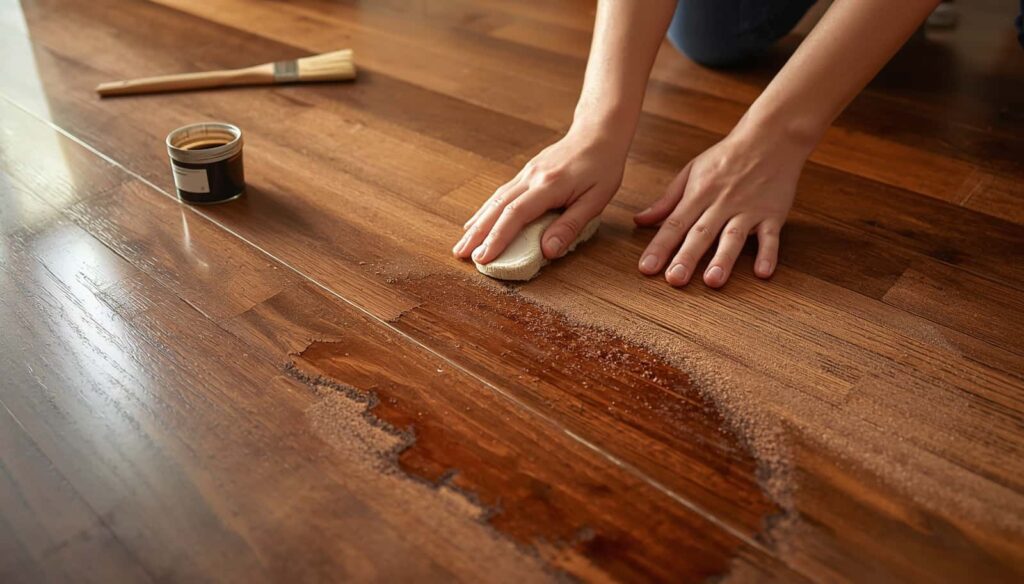
If the stain has penetrated the finish, sanding may be required. Light sanding removes the damaged finish and top layer of wood.
After sanding:
Color matching requires experience. Poor blending can make repairs more noticeable than the original stain.
If the stain extends deep into the wood or into the subfloor, replacing individual boards may be necessary.
This is typically required when:
Precise removal and matching are critical to maintain structural integrity and visual consistency.
Uric acid crystals can embed in wood and reactivate in humidity. According to veterinary research, these crystals are not fully removed by traditional cleaners. They must be broken down enzymatically or physically removed.
In many cases, refinishing the affected area eliminates pet odor from wood flooring completely.
Prevention protects both appearance and value.
A well-maintained finish prevents moisture from penetrating raw wood.
Quick response remains the most effective defense.
DIY solutions work for surface issues, but professional refinishing becomes necessary when stains run deep. Some hands-on projects reward a do-it-yourself approach — a creative hobby you pick up through ceramic courses near me, for instance — but deep hardwood damage usually isn’t one of them:
Refinishing removes the damaged surface layer, seals exposed wood, and restores protection. This not only eliminates odor but also extends the lifespan of the floor.
Refinishing is typically more cost-effective and preserves the original hardwood.
A professional evaluation determines the most practical and cost-effective solution.
Yes. If left untreated, urine can permanently stain and weaken hardwood.
Discoloration can begin within 24 to 48 hours. Structural impact depends on saturation and wood type.
In most cases, sanding and sealing remove odor by eliminating contaminated wood layers.
Only if specifically labeled safe for sealed hardwood and used in controlled amounts.
Rarely. Black stains usually indicate deeper penetration and require sanding or board replacement.
Pet stains and odors do not have to ruin hardwood floors. Quick action prevents long-term damage. When stains have set in, proper diagnosis and professional refinishing can restore both appearance and structural integrity.
If you are dealing with persistent staining or odor, Carmel Flooring Company provides expert hardwood floor refinishing and restoration tailored to the condition of your floors. Professional assessment ensures the right solution without unnecessary replacement.
Call Carmel Flooring Company today!