- 10% Off Flooring Services
- Free Estimates

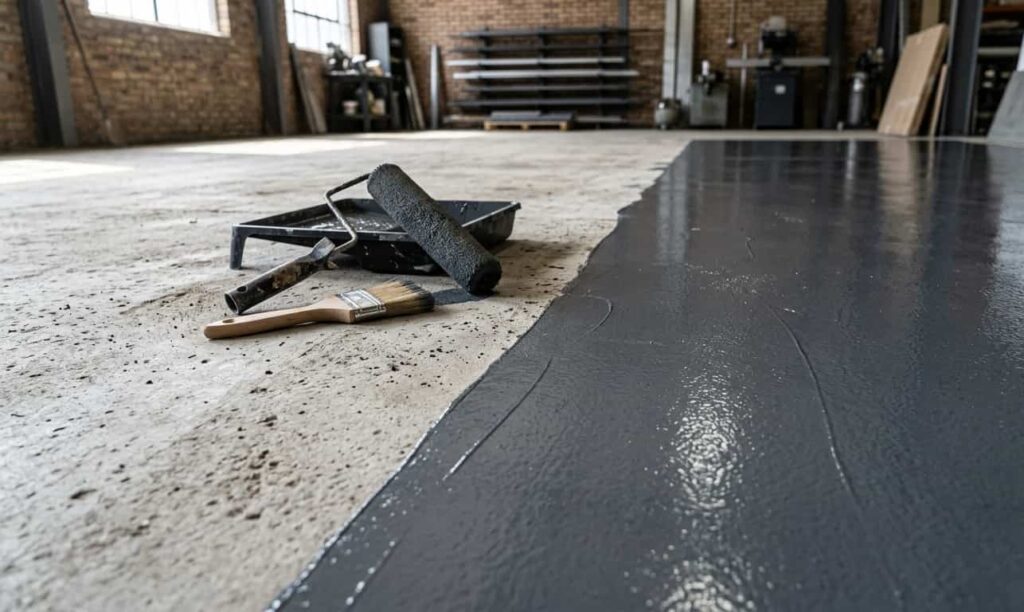
✔ Long-term performance depends on choosing the right coating system.
✔ Polyaspartic and polyurea coatings generally last longer than basic sealers or paint.
✔ Proper surface preparation is one of the biggest factors in preventing early coating failure.
✔ A thicker coating system usually provides better durability in high-use areas.
✔ Routine cleaning and basic maintenance can help extend the life of the coating
Choosing a non-slip concrete coating is not just about improving safety. It is about finding a solution that can handle daily use, changing conditions, and long-term wear without constant repairs or replacement. With so many options available, it can be difficult to know which factors actually matter and which ones will impact performance over time.
Here are the key things to consider.
A non-slip concrete coating is a protective layer applied over concrete that adds both durability and traction. Unlike simple sealers or paints, these coatings chemically bond to the surface, creating a thicker, more resilient finish.
Slip resistance comes from additives mixed into the top layer. These create texture that improves grip, especially in wet or high-traffic areas.
Common applications include:
It is important to distinguish coatings from basic options like epoxy garage floor paint kits. Those are typically thinner, less durable, and not designed for long-term performance.
Understanding the difference between coatings and sealers is critical when evaluating long-term value.
Feature | Concrete Coatings | Concrete Sealers or Paint |
Thickness | 20 to 30+ mils | Very thin surface layer |
Lifespan | 10 to 20+ years | 1 to 3 years |
Durability | Strong adhesion and impact resistance | Prone to peeling and wear |
Maintenance | Low maintenance over time | Requires frequent reapplication |
Long-Term Cost | Higher upfront, lower over time | Lower upfront, higher over time |
While sealers and basic paints may appear cost-effective upfront, they often lead to repeated repairs and higher long-term costs. For homeowners focused on durability and return on investment, coatings are the better choice.
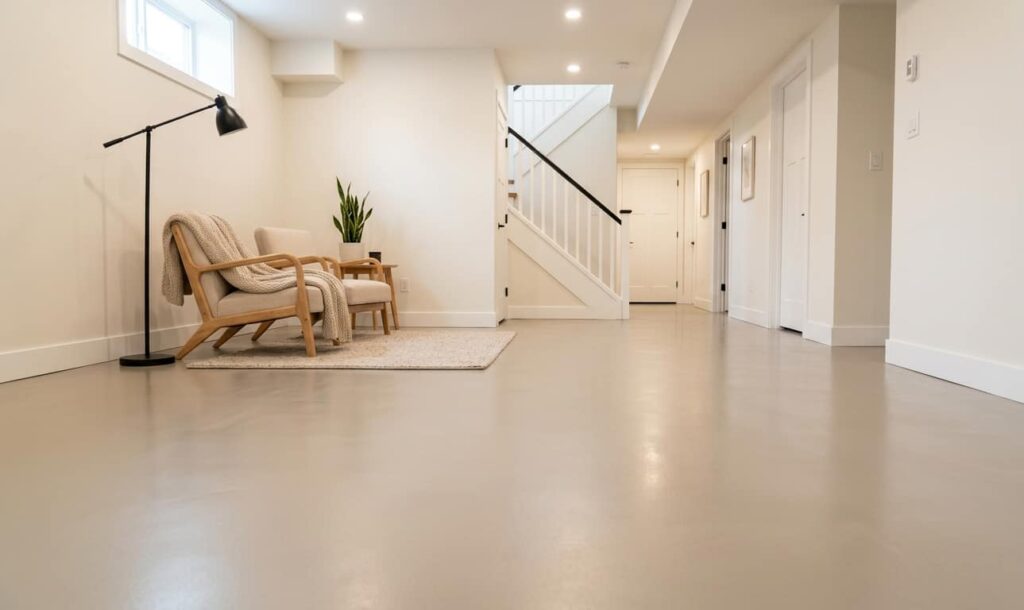
The material you select determines how well your floor will hold up over time.
Polyaspartic or Polyurea Systems
Industrial-Grade Epoxy
Hybrid Systems
Avoid
The coating itself is only part of the equation. The additive used in the topcoat determines how slip-resistant the surface will be.
Aluminum oxide is one of the most durable non-slip additives available, which is why it is often used in high-performance floor coating systems. Because it is a hard inorganic material, it helps create a wear layer that resists abrasion, scratching, and surface wear while maintaining reliable traction in high-traffic or wet areas.
Quartz and polymer flakes are commonly used in residential systems because they add both texture and visual appeal. These flakes create a lightly textured surface that improves grip while also giving the floor a more finished, decorative look.
Sand is a more budget-friendly non-slip additive that can still provide basic traction. However, it tends to wear down faster over time compared to more durable options, making it less ideal for long-term performance in high-traffic areas.
If you are searching for the best anti-slip paint for concrete, the answer is not just the coating. It is the combination of coating and additive that delivers long-term performance.
Surface preparation is the most critical factor in whether a non-slip epoxy coating for concrete lasts 10 years or fails in two. Industry data shows that up to 90 percent of coating failures are due to improper preparation.
Professional installers use:
These methods open the concrete pores, allowing the coating to bond effectively. Avoid systems that rely only on acid etching. This method does not create the same level of adhesion and often leads to peeling.
Thickness directly impacts durability.
Thicker coatings provide better resistance to impact, abrasion, and daily wear. Thin coatings, including many DIY products, simply do not have the build required for long-term performance.
Concrete naturally releases moisture vapor, and if that moisture is not identified before installation, it can lead to bubbling, peeling, or delamination over time. That is why moisture testing is a critical step before any coating system is applied.
A professional installer will use proper testing tools to check moisture levels in the slab and determine whether the surface is ready for coating. Moisture meters are commonly used on materials like concrete, making them a useful way to detect hidden moisture issues that could affect adhesion and long-term performance.
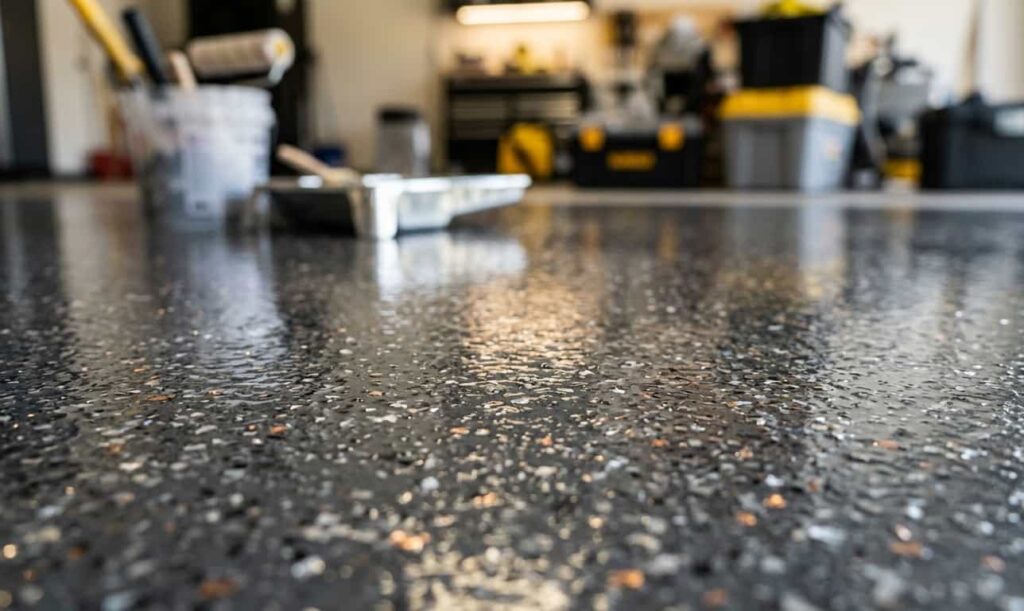
DIY kits are widely available, but they rarely deliver a 10+ year lifespan.
Professional installation ensures:
Experienced concrete flooring companies have the equipment and expertise required to install coatings that perform as intended.
A long-lasting concrete coating depends on more than the product label. Whether you are comparing concrete flooring companies or reviewing options like a non-slip epoxy coating for concrete, these factors have the biggest impact on how well the system holds up over time.
Surface preparation is one of the most important parts of a successful installation because it helps the coating bond properly to the concrete. If the surface is not prepared correctly, even a high-performance system can peel or fail early.
Different materials offer different levels of durability, flexibility, and resistance to UV rays and chemicals. Polyaspartic, polyurea, and industrial-grade epoxy systems generally last much longer than basic garage floor paint products.
A thicker coating system usually provides better protection against impact, abrasion, and daily wear. Thin products, including some epoxy garage floor paint kits, often do not have the build needed for 10+ year performance.
Outdoor areas and damp environments place more stress on a coating, especially if the product is not UV-stable or moisture-resistant. Choosing the best anti-slip paint for concrete also means making sure it can handle the specific conditions of the space.
The amount of daily traffic affects how quickly a coating surface wears down. Garages, walkways, and other high-use areas need a system built to resist repeated pressure and friction.
Even durable coatings last longer when they are cleaned and maintained properly. Regular upkeep helps protect the finish, preserve traction, and reduce premature wear.
A high-quality concrete coating is designed to handle daily wear, but regular care still plays an important role in how long it lasts. With a few simple maintenance habits, homeowners can protect the finish, preserve slip resistance, and get more value from their investment.
Routine cleaning helps remove dirt, grit, and surface residue that can slowly wear down the coating over time. Using mild detergent and water is usually enough to keep the surface clean without damaging the finish.
Some coatings are built to resist chemicals, but not every system performs the same under repeated exposure. Checking product recommendations before using strong cleaners helps prevent staining, dullness, or surface breakdown.
Salt, sand, and debris tracked in during winter can be abrasive and may shorten the life of the coating if left in place. Regular sweeping and rinsing during colder months can help reduce wear and keep the surface looking clean.
Heavy tools, storage items, or equipment can create pressure points that scratch or stress the coating over time. Protective pads help distribute weight more evenly and reduce the risk of surface damage.
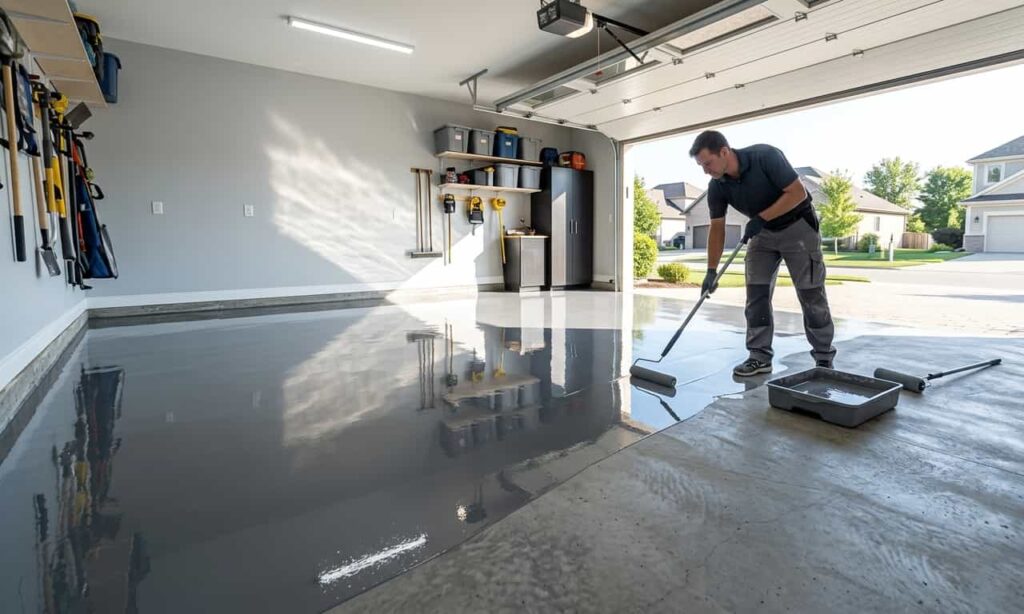
The cost can vary depending on the size of the area, the material used, and the level of surface preparation required. Higher-performance systems like polyaspartic or polyurea usually cost more upfront but last significantly longer. This makes them more cost-effective over time compared to basic options like garage floor paint.
Most professional installations can be completed within one to two days, depending on the system and the condition of the concrete. Some fast-curing coatings, like polyaspartic, allow for quicker turnaround times and faster return to use. Proper preparation and curing are essential, so timelines may vary slightly.
Minor cracks and surface imperfections can usually be repaired before applying a coating. However, severely damaged or uneven concrete may require more extensive preparation or resurfacing. A proper evaluation ensures the coating bonds correctly and performs as expected.
Yes, most coatings enhance the look of concrete by adding color, texture, or decorative flakes. Homeowners can choose from a variety of finishes to match their space. The final appearance depends on the system and additives used.
Most coatings are designed to balance traction with comfort underfoot. The level of texture can be adjusted depending on the additive used and the intended use of the space. Areas like pool decks may require more grip, while indoor surfaces may feel smoother.
Choosing the right non-slip concrete coating is about more than immediate safety. It is a long-term investment in durability, performance, and reduced maintenance costs.
By selecting the right material, ensuring proper surface preparation, and working with experienced professionals, homeowners can achieve a floor that lasts well over a decade.
For homeowners in Carmel, NY, looking for reliable results, Carmel Flooring Company provides expert guidance and professionally installed concrete coating systems designed for long-term performance.
Contact Carmel Flooring Company for expert flooring services.