
What’s In This Guide
Choosing a concrete flooring contractor requires more than comparing the final price. Existing slab conditions, preparation methods, moisture levels, installation planning, and curing schedules can all affect the floor’s appearance and performance. Whether the project involves a Carmel home, garage, office, showroom, or retail space, the following criteria can help you distinguish a detailed installation plan from a vague estimate.
Quick Facts
- A qualified contractor evaluates the slab condition, moisture risks, intended use, and finish requirements before preparing an estimate.
- Detailed estimates identify the included surface preparation, repairs, leveling, materials, sealing, property protection, disposal, and cleanup.
- Proper moisture retention and temperature control during curing help concrete develop its intended strength, durability, and surface quality.
- Request examples of completed floors with similar substrates, uses, finishes, and site conditions rather than relying only on visually attractive portfolio images.
- Before signing a contract, verify the contractor’s applicable credentials, insurance coverage, written scope, schedule, exclusions, warranty terms, and maintenance instructions.
Why the Right Concrete Floor Contractor Matters
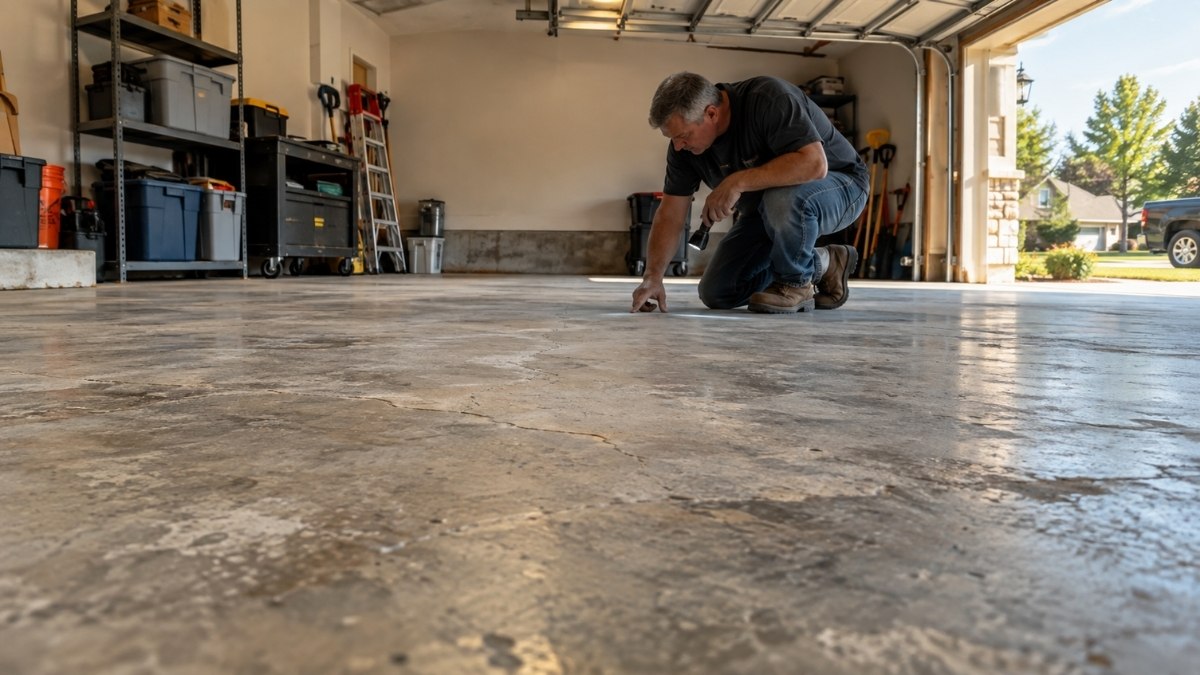
Each installation decision can affect the finished floor. Surface contamination may weaken adhesion, while high or low areas can interfere with drainage, transitions, equipment, or furniture placement. Improper finishing or curing may also contribute to dusting, scaling, discoloration, or uneven surface quality.
Concrete floor performance depends on factors such as site preparation, mixture selection, placement, jointing, finishing, and curing. Because concrete can still crack, curl, discolor, or develop minor surface variations, experienced contractors should explain these risks rather than promise a flawless or maintenance-free floor.
How Concrete Floor Installation Works
The installation sequence varies depending on whether the project involves a new slab, an overlay, a polished floor, or a coating system. However, qualified concrete floor installers should address the following six stages.
1. Inspect the Site and Define the Floor’s Use
The contractor should assess traffic, moisture, equipment loads, cleaning, slip concerns, and appearance. A retail floor has different demands than a garage or basement.
2. Prepare and Repair the Surface
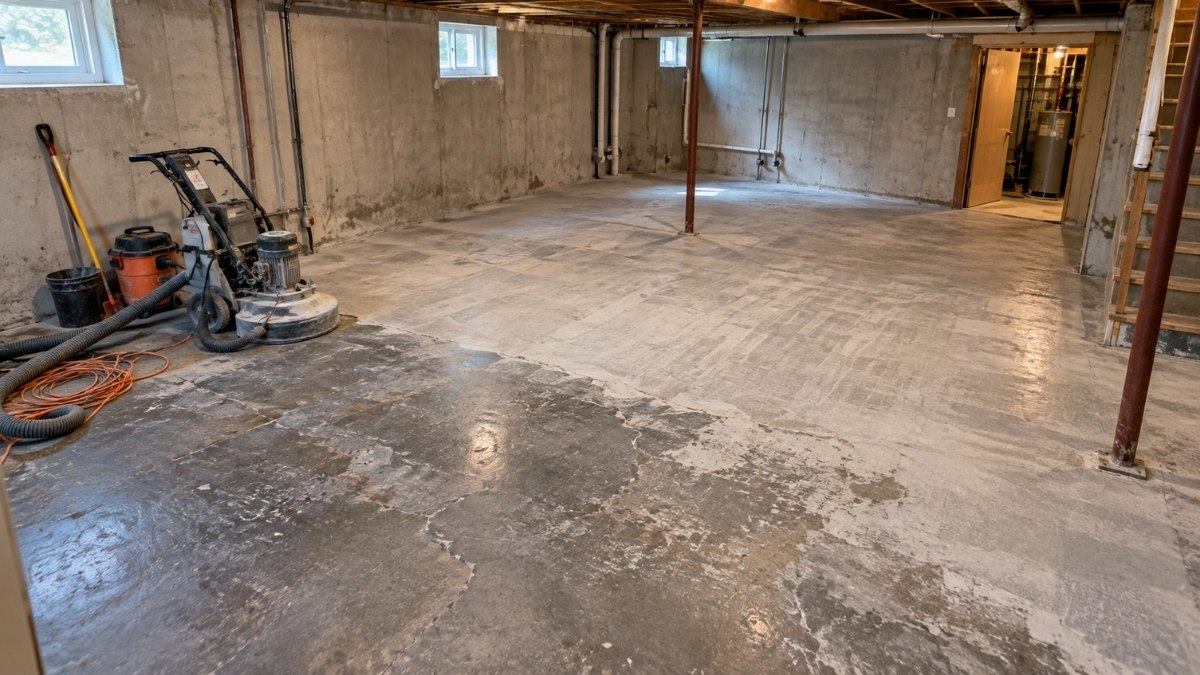
Surface preparation may include removing existing coatings, adhesive residue, oil, dust, weak concrete, and surface irregularities. Cracks, joints, spalling, and other damage should also be evaluated before installation. Ask which preparation and repair methods are included and how the crew will control airborne dust.
3. Check Levelness and Moisture
Contractors should identify high spots, low areas, slopes, and transitions. When a flooring system is sensitive to moisture, ask which test method will be used and how the results will affect product selection. ASTM F2170 provides a standardized method for measuring relative humidity within concrete floor slabs using in-situ probes.
4. Place, Level, and Finish the Concrete
For new installations, the crew places and consolidates the concrete, establishes the required elevation or slope, and finishes the surface. Existing slabs may require grinding, patching, polishing, an overlay, or another compatible flooring system. Confirm the desired sheen, color variation, texture, and slip resistance in writing before work begins.
5. Cure and Protect the Surface
Curing is not simply waiting for concrete to dry. Before final finishing, contractors may use fogging or evaporation retarders to reduce excessive moisture loss when conditions require it. After finishing, the concrete should be cured using an appropriate method for the mixture, environmental conditions, and project requirements. Access, coating, and full-use schedules depend on the concrete mixture, curing method, finish, site conditions, and product specifications.
6. Seal the Floor and Provide Care Instructions
Depending on the product and application, a sealer may help reduce staining, simplify cleaning, or protect the surface from certain types of wear and exposure. Ask why the proposed sealer suits the space, how it may affect sheen and traction, and what maintenance or reapplication it requires.
What Separates Qualified Contractors From Basic Installers
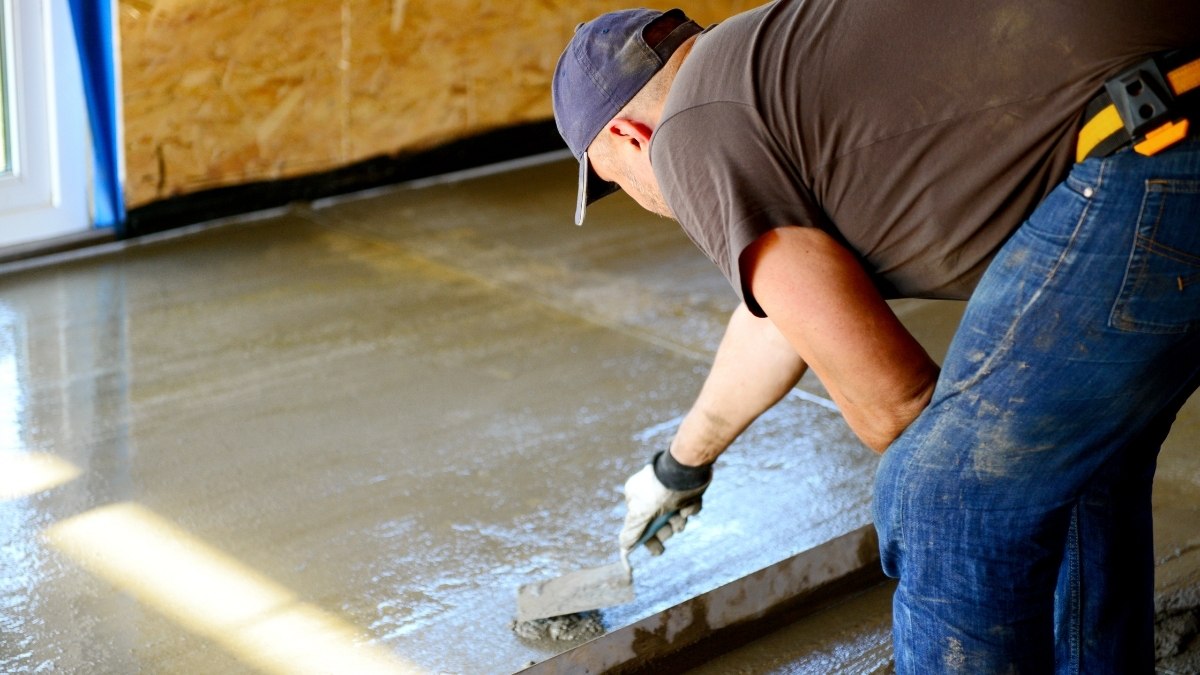
Basic installers may focus on placing material or applying a finish. Qualified concrete floor installation contractors plan the system, document substrate conditions, explain preparation, coordinate joints, follow manufacturer requirements, and set realistic expectations.
Qualified contractors should clearly define their scope of responsibility. Ask whether their team will complete every stage, use subcontractors, or coordinate with separate concrete suppliers, designers, engineers, or coating manufacturers.
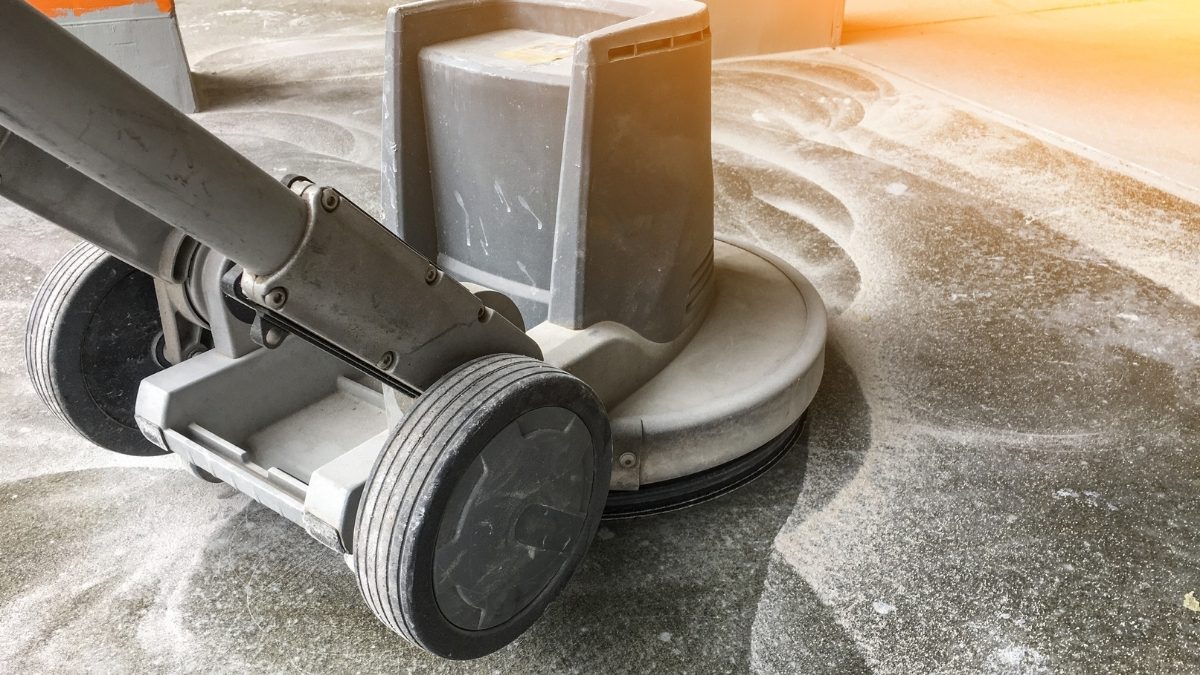
Contractors should explain how they will protect occupants, workers, adjacent surfaces, and air quality during the project. Because grinding and other mechanical preparation methods can generate respirable crystalline silica, ask about engineering controls, dust collection, personal protective equipment, and site-access restrictions. OSHA provides requirements and guidance for controlling silica exposure in construction.
Questions to Ask Before Hiring
Ask each contractor the same questions so you can compare the proposed scope, methods, responsibilities, and timelines consistently:
- Which preparation, repairs, and leveling are included?
- How will you evaluate moisture and surface condition?
- Which finish and sealer fit this space, and why?
- What cracking, color variation, texture differences, or other natural variations should I expect?
- How will joints, edges, doorways, and adjacent floors be handled?
- What are the expected timelines for curing, foot traffic, furniture placement, coatings, and full use?
- Can I see comparable residential or commercial projects?
- Who supervises, protects the property, and manages cleanup?
- What written maintenance instructions will I receive?
For projects in Putnam County, confirm which licenses, registrations, permits, and insurance documents apply to the specific scope of work.
How to Compare Concrete Flooring Estimates
When comparing providers for concrete floor installation near you, do not assume the lowest estimate includes the same scope of work. Compare square footage, surface preparation, repairs, leveling, moisture testing, finish systems, sealers, property protection, disposal, and exclusions.
Review payment terms, change-order procedures, start conditions, and furniture responsibilities. If one estimate costs more, ask which preparation, material, or labor explains it. A clear scope reduces surprises.
Request written product names and technical data sheets whenever a coating or sealer is specified. This information helps you compare coverage rates, application conditions, curing requirements, cleaning restrictions, maintenance needs, and product limitations.
Frequently Asked Questions
How long does concrete floor installation take?
Timing depends on size, conditions, repairs, finish, temperature, humidity, and curing. Ask for separate dates for foot traffic, furniture, coatings, and full use.
Should every concrete floor be perfectly level?
Not necessarily. A floor may meet a flatness requirement, remain level, or include an intentional slope for drainage or transitions. The contractor should document the required condition and acceptable tolerances before work begins.
Do concrete floors always crack?
Concrete may crack or curl as it shrinks, responds to temperature changes, and loses moisture. Proper design, joint placement, installation, finishing, and curing can reduce these risks, but no contractor can guarantee that they will be eliminated entirely.
Does every concrete floor need a sealer?
No. The right decision depends on exposure, finish, cleaning products, traffic, and appearance goals. Ask about compatibility, traction, upkeep, and reapplication.
What should a concrete flooring contract include?
A concrete flooring contract should identify the project area, preparation methods, repairs, materials, finish system, sealer, schedule assumptions, property protection, cleanup, payment terms, change-order procedures, exclusions, warranty terms, and maintenance instructions.
Request a Concrete Flooring Estimate in Carmel, NY
Carmel Flooring Company provides residential and commercial concrete flooring services. Our team evaluates the space, existing surface conditions, intended use, installation options, and maintenance requirements before recommending an appropriate scope of work. Contact us to discuss your project and request an estimate based on your flooring needs and budget.