
What’s In This Guide
Concrete can serve as the finished floor, but the final surface can look and perform very differently depending on how it is treated. For Carmel homeowners, business owners, and property managers searching for concrete floor finishing near me, the key question is not simply which finish looks best. It is which system fits the slab condition, traffic, moisture exposure, cleaning routine, appearance goals, and budget.
Quick Facts
- Polished concrete works best when the underlying slab is structurally sound and suitable for grinding.
- Stains add color but generally do not hide significant flaws because many staining systems remain translucent.
- Sealers protect the surface, while their appearance and performance vary by product and exposure.
- Decorative overlays can create a new finish over worn concrete, but they still require a stable, properly prepared base.
- Epoxy-style coatings can provide a durable film, yet moisture conditions and surface preparation can affect adhesion and performance.
Compare Common Concrete Floor Finish Options
Polished Concrete
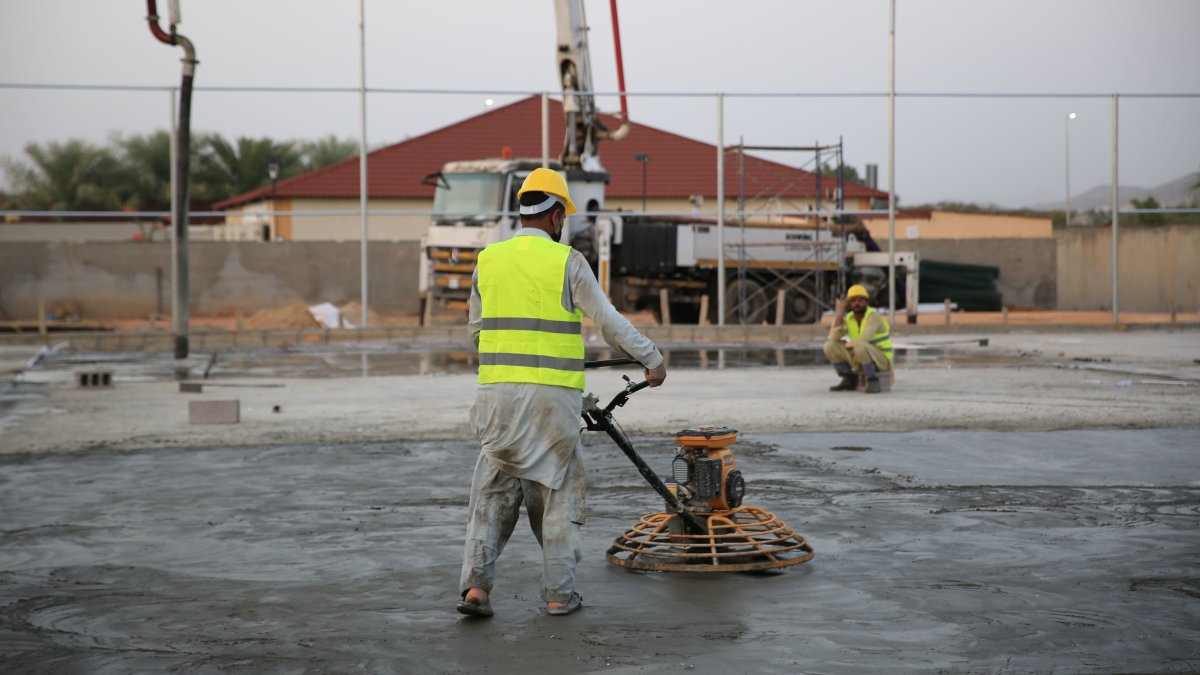
Polishing mechanically grinds, hones, and polishes a concrete floor surface with bonded abrasives to progressively refine the finish. The process can produce anything from a lower-sheen satin appearance to a highly reflective surface. Nearly any structurally sound concrete floor can be considered for polishing with proper preparation, although badly spalled, very soft, porous, or extensively patched slabs may require another approach.
Polished concrete often suits retail areas, offices, showrooms, finished basements, and other spaces where owners want the slab itself to become the visible floor.
Stained Concrete
Staining changes the color of concrete while allowing natural variation to remain visible. It can create subtle, mottled, or more uniform effects depending on the staining system and substrate. Because stains and dyes may be translucent, they usually cannot conceal heavy discoloration, patchwork, or repairs.
Stained concrete is worth considering when the existing slab has a visual character you want to keep. A contractor should evaluate old coatings, contaminants, repairs, and porosity before recommending a stain and protective topcoat.
Sealed Concrete
A sealer provides a protective treatment at or near the concrete surface. Depending on the chemistry, a sealer may alter sheen, deepen color, or provide added resistance to staining and wear. The right choice depends on whether the floor is indoors or outdoors, expected traffic, moisture conditions, and the desired appearance.
Sealed concrete can suit utility areas, basements, commercial spaces, and decorative floors where the goal is straightforward protection rather than extensive resurfacing.
Decorative Overlays
An overlay places a new cement-based surface over existing concrete. This approach can help cover surface imperfections and create a fresh canvas for color, texture, or polishing. Overlays can range from thin microtoppings to thicker self-leveling systems.
An overlay won’t stabilize a weak slab. Cracks, moisture, and poor preparation can damage the new surface. Contractors should inspect the substrate for needed repairs first. For deeper damage, learn when concrete floor repair beats replacement.
Epoxy-Style Finishes
Epoxy systems create durable resinous coatings for garages, basements, and commercial spaces. As one of several concrete floor resurfacing options in Carmel, NY, compare epoxy against alternatives to find the best fit.
Product formulation, UV exposure, moisture vapor, surface profile, traffic, and cleaning chemicals can influence performance. Evaluate slab moisture before epoxy application because moisture vapor transmission can interfere with adhesion and contribute to coating failure.
How to Choose a Concrete Floor Finish
Step 1: Start With the Slab
Check for cracks, spalling, previous coatings, uneven areas, oil contamination, repairs, and signs of moisture. A finish cannot compensate for every substrate problem.
Step 2: Define How the Space Is Used
Consider traffic, chemical or water exposure, cleaning needs, and room type. For example, in bathrooms, compare concrete to vinyl flooring or tile based on moisture and maintenance.
Step 3: Set the Appearance Goal
Decide whether you prefer exposed concrete, added color, a glossy or satin surface, decorative texture, or a more uniform coating. Existing slab character matters when choosing transparent finishes.
Step 4: Compare Maintenance Requirements
Ask how the finish should be cleaned, whether it needs periodic resealing or recoating, and which cleaners could damage it. Maintenance should fit how the property actually operates.
Step 5: Have a Contractor Confirm the System
Experienced concrete floor finishers near you should evaluate the substrate before specifying preparation and finish materials. For polished work, qualified polished concrete floor installers can also explain achievable sheen and aggregate exposure based on the existing slab. Knowing how to choose concrete floor contractors in Carmel, NY, makes it easier to vet those candidates.
Frequently Asked Questions
Can concrete floor finishes be applied over existing coatings?
Sometimes. Existing coatings may need to be removed or mechanically prepared before a new finish is installed. The contractor should check adhesion, compatibility, contamination, and the condition of the underlying concrete before recommending another system.
Can concrete floor finishes help hide cracks and repairs?
It depends on the finish. Transparent systems such as stains and many sealers can leave repairs and color variation visible, while overlays or opaque coatings may provide a more uniform appearance. Structural or moving cracks still need to be evaluated before finishing.
Are concrete floor finishes suitable for basements?
Basement slabs require moisture testing before finishing, as vapor affects options differently. If the basement includes a bathroom, consider heated bathroom floor installation.
Can the sheen of a concrete floor be changed later?
Often, but the options depend on the existing finish. Polished concrete may sometimes be further refined, while sealed or coated floors may require cleaning, abrasion, recoating, or removal before the appearance can be changed.
Should concrete moisture be tested before applying a floor finish?
It can be important, especially for coatings and other low-permeability systems. Excess moisture moving through the slab can interfere with adhesion or contribute to blistering, delamination, or other finish problems, so moisture conditions should be evaluated before installation.
Match the Finish to Your Carmel Property
Choosing among polished, stained, sealed, overlay, and epoxy-style concrete finishes starts with the existing slab and the way the space will be used. Carmel Flooring Company can assess your concrete, discuss practical finish options, and explain the preparation required for your home or commercial property.
Request a free estimate for concrete flooring in Carmel, NY, to discuss your project.
Related Posts